Author Archives: web administrator

Furjaeva Tat’jana Vasil’evna

E-mail: tat.fur130@mail.ru

Place of work: Krasnoyarsk State Pedagogical University named after V. P. Astafyev, Krasnoyarsk, Russia

Academic degree: Doctor of Pedagogical Sciences

Academic status:  Full professor

Post: head of the department of Social Pedagogics and Social Work

Specialty from nomenclature of scientific specialties (Code of Higher Attestation Commission):  13.00.01 – General Pedagogy, History of Pedagogy and Education

Scientific major: cultural and anthropological approach in education and the social sphere

Important publications:

  1. Furjaeva T.V., Setevaja model’ otkrytogo professional’nogo social’nogo obrazovanija (na primere Krasnojarskogo kraja) / T. V. Furjaeva, Ju. A. Cherkasova, Ju. Ju. Bocharova. Krasnojarsk : KGPU im. V. P. Astaf’eva, 2013. 271 s.
  2. Furjaeva T.V. Gumanizacija diskursivnyh praktik professional’no-pedagogicheskogo soobshhestva v dopolnitel’nom obrazovanii: monografija. (Serija: Antropologija i social’naja praktika. vyp.13.) / T.V. Furjaeva, O.P. Pecuh. Krasnojarsk : KGPU im. V. P. Astaf’eva, 2014. 300 s.
  3. Novaja magistratura v pedagogicheskom universitete: vyzovy i realii: kollektivnaja monografija / pod red. T.V. Furjaevoj. (Serija: Antropologija i social’naja praktika). Krasnojarsk : KGPU im. V. P. Astaf’eva, 2013. 271 s.
  4. Furjaeva T.V. Reabilitacija i integracija ljudej s invalidnost’ju v obshhestvo: uchebnoe posobie dlja magistrantov (Serija: Antropologija i social’naja praktika. vyp.12.) / T.V. Furjaeva, Ju.Ju. Bocharova. Krasnojarsk : KGPU im. V. P. Astaf’eva, 2014. 300 s.
  5. Furjaeva T.V. Social’no-pedagogicheskaja internatura: variant professionalizacii bakalavriata (Serija: Antropologija i social’naja praktika. vyp.14.) / T. V. Furjaeva, Ju.Ju. Bocharova, T.A. Hackevich. Krasnojarsk : KGPU im. V. P. Astaf’eva, 2014. 128 s.
  6. Furjaeva T.V. Social’naja inkljuzija: teorija i praktika: monografija (Serija: Antropologija i social’naja praktika. vyp.15.). Krasnojarsk, 2017. 279 s.
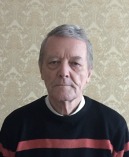
Konopljov Nikolaj Sergeevich

E-mail: nikolay.konoplev@gmail.com

Place of work: Irkutsk State University, Irkutsk, Russia

Academic degree: Doctor of Philosophy

Academic status:  Full professor

Post: professor of Department of Philosophy and Methodology of Science

Specialty from nomenclature of scientific specialties (Code of Higher Attestation Commission):  09.00.01 – a dialectic and historical materialism

Scientific major: philosophical problems of social and humanitarian knowledge, philosophy history, education philosophy in the XXI century

Important publications:

  1. Konopljov N.S. Princip determinizma kak metodologicheskaja osnova gumanitarnyh nauk / N.S. Konopljov. – Irkutsk, 1986. – 320 s.
  2. Konopljov N.S. Vvedenie v kul’turologiju. Ch. 1 / N.S. Konopljov. – Irkutsk, 1994. – 155 s.
  3. Konopljov N.S. Istorija zapadnoevropejskoj filosofii / N.S. Konopljov. – Irkutsk. – 1995.
  4. Konopljov N.S. Filosofija obrazovanija v XXI veke: novye orientiry: monografija / N.S. Konopljov. – Irkutsk: «Ottisk», 2013. – 132 s. (v soavt. s V.A. Kolesnikovym).
  5. Konopljov N.S. Istorija svobodomyslija. Uchebnoe posobie / N.S. Konopljov. – Irkutsk: Izd-vo «Ottisk», 2016. – 125 s.
  6. Konopljov N.S. Raboty raznyh let / N.S. Konopljov. – M.: Izdatel’skij dom «Jenciklopedist-Maksimum», 2018. – 185 s.
  7. Konopljov N.S. Fenomen dvoeverija v svjazi s cerkovnymi refor-mami patriarha Nikona / N.S. Konopljov. — Izvestija Irkutskogo gosudarstvennogo universiteta. Serija: «Politologija. Religiovedenie». – Irkutsk, 2017. 19. – S. 50-56.
  8. Konopljov N.S. Real’naja istorija kak sochetanie “sily” i “nasilija” v fokuse nauki istorii (filosofsko-metodologicheskij aspekt) / N.S. Konopljov. — Izvestija Irkutskogo gosudarstvennogo universiteta. Serija: «Politologija. Religiovedenie». – Irkutsk, 2016. – T. 18. – S. 165-174.
  9. Konopljov N.S. Aleksandr Vampilov i Valentin Rasputin v dialoge. postanovochnyj reportazh / N.S. Konopljov // Aleksandr Vampilov i Valentin Rasputin: tvorcheskij potencial “irkutskoj istorii”. — Materialy Mezhdunarodnoj nauchnoj konferencii. Pechataetsja po resheniju uchenogo soveta fakul’teta filologii i zhurnalistiki IGU. Irkutsk, 2017. – S. 57-78.
  10. Konopljov N.S. Mesto Velikogo Oktjabrja v predstojashhem stanovlenii noosfernoj formy dvizhenija materii / N.S. Konopljov // Antologija sovremennoj russkoj filosofii. Tom 2. 2-e izd., ispravl. i dopol. – M.: Izd. dom «Jenciklopedist-Maksimum», 2018. – S. 118-126.

Amosova Ol”ga Viktorovna

E-mail: amosova_ov@mail.ru

Place of work: The Russian Presidential Academy Of National Economy And Public Administration, Moscow, Russia

Academic degree: Candidate of pedagogical science

Academic status: Associate professor

Specialty from nomenclature of scientific specialties (Code of Higher Attestation Commission): 13.00.01 – General Pedagogy, History of Pedagogy and Education

Scientific major: education, continuous professional education, professional education, professional competence

Elena Vaskina

E-mail: vaskinaelena@mail.ru

Place of work: Federal State Public Educational Establishment of Higher Training “Eastern Siberia Institute of the Ministry of the Interior of the Russian Federation”, Irkutsk, Russia

Academic degree: Candidate of pedagogical science

Academic status: Associate professor

Post: associate professor of foreign languages and standard of speech

Specialty from nomenclature of scientific specialties (Code of Higher Attestation Commission): 13.00.01 – General Pedagogy, History of Pedagogy and Education

Scientific major: moral education, teaching foreign languages, motivation to learning of foreign languages

Important publications:

  1. Vaskina E.A. K voprosu o soderzhanii uchebnyh posobij po ino-strannomu jazyku i ih vlijaniju na nravstvennoe vospitanie obuchajushhihsja // V sbornike: Podgotovka kadrov dlja silovyh struktur: sovremennye napravlenija i obrazovatel’nye tehnologii Sbornik materialov 23-j vserossijskoj nauchno-metodicheskoj konferencii. 2018. S. 285-288.
  2. Vaskina E.A. K voprosu o povyshenii vospitatel’nogo potenciala discipliny «inostrannyj jazyk» // Aktual’nye problemy bor’by s pre-stuplenijami i inymi pravonarushenijami. 2018. № 16-2. S. 132-133.
  3. Vaskina E.A K voprosu o podderzhanii motivacii k izucheniju inostrannyh jazykov v sovremennyh obrazovatel’nyh uslovijah / E.A. Vaskina, T.S. Karimova // V sbornike: Sovremennye problemy professional’nogo obrazovanija: opyt i puti reshenija materialy Vtoroj vserossijskoj nauchno-prakticheskoj konferencii s mezhdunarodnym uchastiem. 2017. S. 100-103.

Hermeneutic analysis of French feature films about school and university*

UDC 791.2 BBK 85.373(3)

Fedorov A. V.

The hermeneutic analysis of French feature films on the theme of school and university showed that the level of depth of immersion in school-student problems was always connected with the political and socio-cultural context. As the liberation from censorship restrictions and changes in the ethnic composition of the society, the French screen more often modeled acute plot twists related to sex, violence, deviance, political correctness and dialogue of cultures, more and more often revealing dead-end versions of classical approaches to education based on high ideals of humanism and democracy. In this respect, French cinema, of course, echoes as with many American films about the school and university of the second half of XX – beginning of the XXI century, and with some Russian films on the same topic. At the same time, it can be noted that, in general, the school-student thematic segment of the French screen, unlike Hollywood, is less entertainment-oriented, increasingly suggesting a deep insight into sociocultural problems.

Key words: film, cinema, movie, France, cinematography, teacher, educator, school, university, student, education.

* This research was funded by the grant of the Russian Science Foundation (RSF, project No. 17-18-01001) at the Rostov State University of Economics. Project theme: “School and university in the mirror of Soviet, Russian and Western audiovisual media texts”. Head of the project is professor A. V. Fedorov.

Download article in PDF (218.3 kB)

New trends in the vocabulary of administrative and political discourse

UDC 81.23 BBK 81.2 Рус-5

Kotlyarova O. V.

In the present article the author makes the assumption that there are active changes in the lexical composition of the modern Russian language, in particular, in the administrative and political discourse. The changes that are taking place can be called democratization and modernization of the administrative sociolect, which consist in the expansion of the active vocabulary of the authorities, its qualitative change, the emergence of new combinable possibilities of words. The relevance of the work is confirmed by the fact that the speech of government officials, politicians, political leaders, representatives of state and municipal administration reflects the current state of cultural development of society.

Key words: administrative and political discourse; new trends in vocabulary; vocabulary of civil servants, speech culture.

Download article in PDF (212.7 kB)

Kotlyarova Olga Vladimirovna

E-mail: olyaapriori@yandex.ru

Place of work: Vladimir branch of the Russian Presidential Academy of National Economy and Public Administration under the President of the Russian Federation, Vladimir, Russia

Academic degree: Candidate of Philological Sciences

Post: Associate Professor of the Department of Social and Humanitarian disciplines of the Vladimir branch of RANEPA

Specialty from nomenclature of scientific specialties (Code of Higher Attestation Commission): 10.02.01 – Russian language

Scientific major: linguistics, language theory, additional professional education, pedagogy.

Important publications:

  1. Kotlyarova O.V., Potapova Е.P. Kommunikativnaya kompetentnost’ gosudarstvennyh i municipal’nyh sluzhashchih. Monografiya. Vladimir, 2018.
  2. Baranov A.V., Tagaev A.V., Kotlyarova O.V. Sistema otkrytogo obrazovaniya v respublike Koreya: perspektivy vnedreniya. // Srednerusskij vestnik obshchestvennyh nauk. 2017. T. 12. № 6. S. 40-55.


On the issue of phraseological etymology (on the example of the phraseological unit «die Flötentöne beibringen»)

UDC 81-139 BBK 81.1

Stepanenko V. A.Dribon D. O.

The article is devoted to the etymological study of the phraseological unit jmdm die Flötentöne beibringen. Being collected by the continuous sampling method and analysed, the empiric material enabled to find out phraseological etymology sources, in addition to those, which had been registered in different German etymological dictionaries.

Key words:  etymology of a phraseological unit, Aesop’s fable «The Fisherman and his Flute», pan flute, flute allemande.

Download article in PDF (366.7 kB)

Features of language of comments on performances of German satirists

UDC 811.112.2 BBK 81.432.4

Merkurjewa V. B.Chashchin A. A.

The article analyzes the characteristic features inherent in the comments of the entertaining Internet media discourse, and highlights their language features.

Key words: Internet media discourse, entertaining discourse, comments, German satirists, evaluation, Anglicism, dialectism, graphic means, emotionality, expressiveness.

Download article in PDF (203.8 kB)

Hermeneutical analysis of the film “Monsieur Lazar”*

UDC 316.77:001.8 BBK 65.5.325.1:65.5.57с

Gorbatkova O. I.

This article is devoted to the hermeneutic analysis of the Canadian film “Monsieur Lazar” (2011), the author analyzed the structure and methods of the narration, reviews of film critics in the historical, ideological and sociocultural context. In the process of hermeneutical analysis of the film “Monsieur Lazar”, the author comes to the conclusion that the story content is not directly related to the key events taking place in the international political life of Canada, however, the socio-cultural, economic, educational tasks are to some extent reflected in the story line of the media text. The film emphasizes understanding the surrounding reality, highlights social, educational, personal (individual, subjective, psychological) problems, interpersonal relationships of the main characters (the relationship of the teacher with the teaching staff, teachers and students, schoolchildren in the class, relations in the family); the problem of moral education of the younger generation, while there is no clear division between “positive” and “negative” characters.

Key words: hermeneutic analysis, cinematography, film, film production, media text, teacher, students, Canada.

* This research was funded by the grant of the Russian Science Foundation (RSF, project No. 17-18-01001) at the Rostov State University of Economics. Project theme: “School and university in the mirror of Soviet, Russian and Western audiovisual media texts”. Head of  the project is professor  A.V. Fedorov.

Invalid download ID. (242.6 kB)

« Older Entries Recent Entries »