Author Archives: web administrator

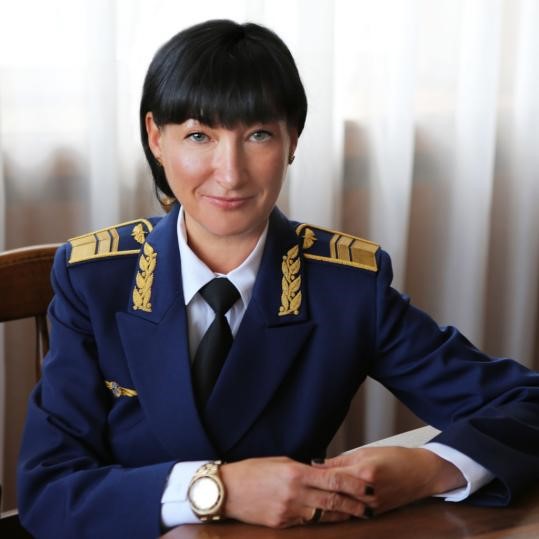
Romanenko Nelli Mikhailovna

Emailonly_n@inbox.ru

Place of study: Federal State Budget Educational Institution of Higher Education «Moscow State Technical University of Civil Aviation», Moscow, Russia

Status: post-graduate student of Department of Operation and Maintenance of Airborne Radio-Electronic Equipment

Scientific major: implementation of advanced automation tools for the monitoring and maintenance of avionics systems in civil aviation. 

Important publications:

  1. Bolelov E. A. Affine design as a tool for separating signals from radar targets / A. Bolelov, A. I. Kozlov, N. M. Romanenko // Radio engineering and telecommunication systems. – 2023. № 1 (49). – pp. 22-32.
  2. Bolelov E. A. Integrated signal processing of the global navigation system and 5G positioning modules for the purpose of navigation support for flights of unmanned aerial vehicles in the conditions of mass development of modern megacities / A. Bolelov, A. T. Kudinov, N. M. Romanenko // Radio Engineering and Electronics. – 2024. Vol. 69, № 8. – pp. 785-791.

Method for determining an aircraft route to avoid a thunderstorm using the shortest path on a graph

DOI 10.51955/2312-1327_2025_3_35

Gennadiy V. Kovalenko

Ilya A. Yadrov

Abstract. The article presents the results of developing a method for determining the optimal route for bypassing an aircraft (AC) of a temporally constant (stationary) zone of thunderstorm activity and heavy rainfall. The method is based on finding the shortest path on a graph. It takes into account the geometries of hazardous meteorological phenomena and the minimum safe distances to them. The authors compare strategies based on the use of convex and concave hulls in the formation of thunderstorm bypass zones. The analysis reveals a statistically significant difference in the central tendencies of the corresponding route lengths. It demonstrates that routes using concave hulls are on average 2% shorter, with possible absolute differences in lengths of up to several hundred kilometers. The main practical result of the work is that the proposed method for determining the optimal route to avoid a thunderstorm can be used as a tool to increase the situational awareness of aircraft pilots and optimize crew operations when flying in adverse weather conditions. It allows automatic thunderstorm avoidance using an autopilot and contribute to improved economic efficiency of flights by reducing fuel consumption through the selection of the optimal bypass routes.

Keywords: aviation, flight safety, optimization, thunderstorm avoidance, shortest path on a graph, Dijkstra’s algorithm, minimum envelope.

Download article in PDF 928.1 kB

Engineering and technical orientation of students’ project activities as a basis for professional self-determination

DOI 10.51955/2312-1327_2025_3_243

Irina V. Bogomaz

Elena A. Chaban

Annotation. The federal project of the Ministry of Education and Science of Russia «Advanced Engineering Schools», launched in 2022, aims to provide sectors of the economy with qualified personnel to achieve technological independence for the country. Strengthening fundamental training in higher education depends directly on the level of applicants’ knowledge formed at school. There is a decline in students’ interest in engineering and an analysis of school programs in mathematics, mechanics within the framework of physics, and technology revealed inconsistencies in the study of these subjects, which breaks the logical and content lines between theoretical knowledge and practice. The aim is to stimulate schoolchildren’s interest in engineering and technical activity, which will subsequently contribute to the increase of their learning activity in higher education. It is proposed to introduce interdisciplinary project activities for students in grades 7-11 aimed at forming holistic ideas about the world of technology and general engineering culture, mastering scientific knowledge and practical ways of action, developing key mathematical and natural science concepts reflecting the unity of the world and related to fundamental educational objects (concepts, symbols, models). ). A well-designed process of working on engineering projects will contribute to the formation of such skills as building logical and content lines between the sections of mathematics, physics (mechanics) and technology. For first-year university students, it will be a deep understanding of the logic of creating mathematical and physical models of natural processes and technical phenomena.

Key words: education, activity, interdisciplinary integration, mathematical models, project activity.

Download article in PDF 983.4 kB

Current state and prospects for development of airspace planning systems. Part 2

DOI 10.51955/2312-1327_2025_3_87

Alexander Yu. Knyazhsky

Sergey V. Baushev

Abstract. This article is the second part of the review of airspace planning systems. The first part provided a comparative analysis of known air situation models: network, probabilistic, load dynamics, expert, air situation development, potentials, entropy. The second part provides a comparative analysis of existing approaches to airspace planning: route synthesis, ATM load management, flight plans optimization, single air conflict resolution, departure/arrival flow planning. The advantages and disadvantages of the analyzed approaches are identified, their classification is proposed based on the physical meaning and completeness of the group.

Keywords: airspace planning, flight planning, air traffic safety, flight plans, air traffic management, air conflicts, air traffic control.

Download article in PDF 1.0 MB

On the Experimental Setup for Approbation of an Algorithm for Processing Diagnostic Parameters of Aircraft gas turbine engine Based on Multilayer Neural Networks

DOI 10.51955/2312-1327_2025_3_71 

Huseyn Huseynov

Oleg F. Mashoshin 

Abstract. The paper presents experimentally substantiated tabular data for hyperparameter tuning of multilayer neural networks in aviation gas turbine engine diagnostics. The authors propose seven original algorithms for adaptive training parameter tuning, including methods for dynamic adaptation of the learning rate, strategies for changing the network architecture depending on the engine operating mode, and adaptive approaches to regularization. The parameter ranges cover values from 10–5 to 103, which ensures practical applicability for various architectures and data types. The scientific novelty lies in the creation of adaptive algorithms that take into account the specifics of the diagnostic parameters of gas turbine engine components and their time dynamics.

Keywords: multilayer neural networks, aviation engine diagnostics, hyperparameters, adaptive optimization, gas turbine engines, machine learning, time series.

Download article in PDF 501.2 kB

Huseynov Huseyn

Emailkhuseyn.21@gmail.com

Place of study: Moscow State Technical University of Civil Aviation, Moscow, Russia.

Status: Postgraduate student at the Department of Aircraft Engines

Specialty from nomenclature of scientific specialties (Code of Higher Attestation Commission): 2.9.6. Air navigation and operation of aircraft equipment (technical sciences)

Scientific major: Analysis and collection of aircraft engine parameter data. Development of neural network architectures for diagnostics. Modeling and training of neural networks considering complex parameter processing. Fault diagnostics and engine condition prediction.

Important publications:  

  1. Mashoshin O. F. Methodology for diagnosing the technical condition of aviation gas turbine engines using recurrent neural networks (RNN) and long short-term memory networks (LSTM) / O. F. Mashoshin, H. Huseynov, A. S. Zasukhin // Civil Aviation High Technologies. – 2024. – № 27(6). – Pp. 21-41.
  2. Mashoshin O. F. Selection and adaptation of neural network algorithms for diagnosing the technical condition of aircraft engines / O. F. Mashoshin, H. Huseynov // Automation. Modern Technologies. – 2024. – Vol. 78, № 10. – P. 435-442.

Mashoshin Oleg Fedorovich

Emailo.mashoshin@mstuca.ru

Place of work: Moscow State Technical University of Civil Aviation, Moscow, Russia.

Post: Head of the Aircraft Engines Chair, Dean of the Faculty of Mechanics.

Academic degree: Doctor of Technical Sciences.

Academic status: Professor

Specialty from nomenclature of scientific specialties (Code of Higher Attestation Commission): 05.22.14 – Operation of air transport.

Scientific major: A method for establishing a diagnosis based on the optimal choice of the composition of controlled parameters of a gas turbine engine, considering information criteria. Analysis and collection of aircraft engine parameter data. Development of neural network architectures for diagnostics. Modeling and training of neural networks considering complex parameter processing. Fault diagnostics and engine condition prediction.

Important publications:  

  1. Mashoshin O. F. Methodology for diagnosing the technical condition of aviation gas turbine engines using recurrent neural networks (RNN) and long short-term memory networks (LSTM) / O. F. Mashoshin, H. Huseynov, A. S. Zasukhin // Civil Aviation High Technologies. – 2024. – № 27(6). – Pp. 21-41.
  2. Mashoshin O. F. Selection and adaptation of neural network algorithms for diagnosing the technical condition of aircraft engines / O. F. Mashoshin, H. Huseynov // Automation. Modern Technologies. – 2024. – Vol. 78, № 10. – P. 435-442.

Theoretical model of the professional development of a transport security unit employee’s personality

DOI 10.51955/2312-1327_2025_3_6

Aleks E. Ranversman

Abstract. The article presents a theoretical model of the professional development of a transport security employee’s personality who performs screening, additional screening, and secondary screening for the purpose of ensuring transport security. The model reflects three consecutive stages of personal formation in professional activity: professional training, professional adaptation and development, professional implementation and potential decline. Each stage is described through a set of behavioral characteristics formed in the course of performing official duties. The model is based on empirical observation and relies on regulatory requirements and the professional standard. The results make it possible to trace the dynamics of forming and developing professionally important personal qualities and to use the model for the analysis and improvement of the training system for transport security personnel.

Keywords: professional development of personality, transport security, screening officer, professionally important qualities, stages of professional development, participant observation, professional adaptation, personal qualities, model of professional development.

Download article in PDF 1.4 MB

Ranversman Aleks Evgenevna

Emaila.ranversman@mail.ru

Place of study: St. Petersburg State University of Civil Aviation named after Air Chief Marshal A.A. Novikov, St. Petersburg, Russia

Status: degree-seeking applicant

Place of work: Sheremetyevo Security Joint Stock Company, Khimki, Moscow Region, Russia

Post: resource allocation specialist

Specialty from nomenclature of scientific specialties (Code of Higher Attestation Commission): 2.9.1 – Transport and transport-technological systems of the country, its regions and cities; organization of production in transport; 2.9.6 – Air navigation and operation of aviation equipment.

Scientific major: Improvement of technical training tools and systems for training, retraining, and professional development of transport security personnel.

Important publications:

  1. Ranversman, A. E., & Il’kukhin, N. Yu. (2024). Formirovanie i razvitie kriticheskogo myshleniya u novykh sotrudnikov transportnoy bezopasnosti na vozdushnom transporte [Formation and development of critical thinking in newly hired transport security employees in air transport]. Estestvennye i tekhnicheskie nauki, (11(198)), 275–283. https://doi.org/10.25633/ETN.2024.11.17
  2. Ranversman, A. E. (2024). Effektivnost’ ispol’zovaniya razlichnykh metodov obucheniya v prepodavanii pri podgotovke sotrudnikov transportnoy bezopasnosti na vozdushnom transporte [Effectiveness of various teaching methods in training transport security personnel in air transport]. In Fundamental’nye issledovaniya v sovremennom sotsikul’turnom prostranstve: Sbornik nauchnykh statey (pp. 129–134). Moscow: Nauchnyy-izdatel’skiy tsentr “Put’ Nauki”.

Linguistic features of fairy tale film discourse on the example of Grimms’ fairy tale «Der teufel mit den drei goldenen haaren»

DOI 10.51955/2312-1327_2025_3_208 

Anna L. Shadrina 

Abstract. Fairy tale is constantly changing during cultural evolution and technological progress adapting to the new realities through embracing many modern discourses. As a result, a new (hybrid) discourse is being formed, characterized by certain style and plot features. In this article, we make an attempt to analyze one of these hybrid discourses: namely fairy tale film discourse. Taking into account that the main representative of the fairy tale film discourse is a screen adaptation of a magical folktale, the analysis is carried out by studying lexical, semantic and stylistic features of its film dialogue (verbal component). The analysis reveals factors that can influence the relationship between the film version of the fairy tale and its literary basis. The preservation of the main conflict, basic values and main characteristics of the classic fairy tale in the film text as well as the creative development of the original are elucidated. Additionally, some ways of creating a comic effect in fairy tale film discourse are highlighted.

Keywords: discourse, discourse analysis, fairy tale film discourse, film text, film dialogue, screen adaptation, German folktales, Grimms’ fairy tales.

Download article in PDF 342.7 kB

« Older Entries Recent Entries »