Author Archives: web administrator

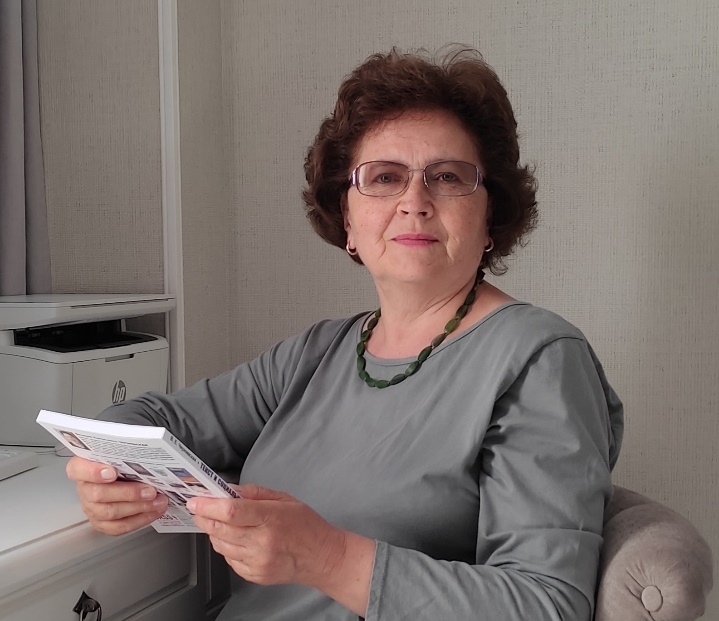
Kardanova-Biryukova Ksenia Sufianovna

E-mail: kardanova-birukovaks@mgpu.ru

Place of work: State Autonomous Educational Institution of Higher Education “Moscow City University”

Academic degree: Candidate of Philology

Academic status: Associate professor

Post: Head of Chair of Linguistics and Translation Studies

Specialty from nomenclature of scientific specialties (Code of Higher Attestation Commission): 10.02.19 – Theory of Language

Scientific major: psycholinguistics, sociolinguistics, theory of language, methodology of scientific research, communication studies

Important publications:

  1. Kardanova-Biryukova, K. S. Framing communication by Russian native speakers: universal and individual features // Cognitive research into language. 2021/ Vol. 3 (46). 806-810.
  2. Kardanova-Biryukova, K. S. Communication as an interdisciplinary research object // Vestnik of MSLU. Humanities series. 2021. Vol. 2 (844). Pp. 24-34.
  3. Ivanova, A.E., Kardanova-Biryukova, K.S. Designing Russian-language version of the international tool to assess early-age reading skills // Educational Studies. №4. Pp. 93-115. (SCOPUS)
  4. Kardanova-Biryukova, K. S. Associative Experiment as a Tool to Construct Dictionary Entries // Proceedings of the XVIII EURALEX International Congress “Lexicography in Global Contexts” – Ljubljana: University of Ljubljana, Department of Humanities, 2018. Pp. 675-683. (SCOPUS)
  5. Kardanova-Biryukova, K. S. Specifics of communicative behavior of Russian speakers in interpersonal communication: experimental research // Vestnik of Volgograd State University. Linguistics series. 2018. Vol. 17. № 1. Pp. 85-97. (Web of Science)

Development of university students’ civic culture on the material of russian social drama films

DOI 10.51955/2312-1327_2021_4_180

Galina V. Mikhaleva

Abstract. The article discusses the technologies and methods of conducting university classes with the elements of film education that contribute to promoting students’ civic engagement based on Russian social drama films. The main research method is a critical analysis of audiovisual media texts about acute social problems of our time, including the analysis of the social stereotypes representations, character analysis, plot analysis and ethical analysis of media representations. Film education allows one to meet some specific educational objectives when viewing and analysing social drama films in the student audience, which are as follows: developing university students’ critical skills in analysing audiovisual media texts, including social stereotypes; teaching students to reasonably defend their life and civic positions, and attitudes to various social challenges of our time; cultivating spiritual and moral values, awareness of national and state identity among young people; fostering civic culture and responsibility; encouraging models of constructive behaviour in various difficult life situations, including problematic and conflict situations; inspiring a strong feeling of rejection of antisocial and disruptive behaviour among young people.

Keywords: civic engagement, civic culture, social drama, university students, film education, audiovisual media text, social stereotype, media representation, civic education, civic competence, critical analysis.

The reported study was funded by RFBR and EISR, project number 21-011-31036.

Download article in PDF 330.0 kB

Interdiscourse of information and psychological warfare as a type of conciental weapon

DOI 10.51955/2312-1327_2021_4_77

Artyom A. Khabarov

Abstract. The article is devoted to the linguistic analysis of the cognitive and communicative mechanism of indoctrination of target-objects in the paradigm of information and psychological warfare initiated by the collective West, led by the United States, with the aim of destroying the integral potential of the opposing states by non-combat means. The author’s concept focuses on language as an instrument of ideological influence carried out at the macro level in the format of interdiscourse, explicated in the spheres of social communication in the form of polarized discursive practices. Using the methods of semantic-structural, conceptual and pragmatic analysis, the author reveals the specifics of the verbalization of communication strategies used for mental influence and speech stimulation in the English-language discourse, identifies the lexical means of secondary nomination and ideological markers of linguocognitive manipulation. As a result of the study, it is concluded that the forms and methods of modeling the interdiscursive environment in the global media, methods of ideological polarization of speech, as well as the specifics of their communicative use for the purpose of manipulating consciousness identify the interdiscourse of information and psychological warfare as a type of conciental weapon.

Keywords: interdiscourse, information and psychological warfare, communication strategy, means of secondary nomination, ideological polarization, linguocognitive manipulation.

Download article in PDF 510.7 kB

The special concept ПОДДАННЫЙ [SUBJECT] as a discoursive historism of russian constitutional intertext

DOI 10.51955/2312-1327_2021_4_64

Darya M. Tataurova

Abstract. In the article analysis of a special concept ПОДДАННЫЙ was provided. The concept is considered as one of the basic parts of the Fundamental Laws of the Russian Empire that is a pretextual base of Russian constitutional intertext. This type of intertext is viewed as a constantly modified synthetic product, which includes legal and political discursive categories. The concept ПОДДАННЫЙ [SUBLECT] is a discursive predecessor of its modern quasisynonym ГРАЖДАНИН [CITIZEN].  The term «подданный» is a hyperonym reflecting political and law linguistic picture of the world during the historical period of the Russian Empire and characterized by lexico-semantic element «allegiance». A complicated structure of the lingvocognitive category correlating with the term given is studied by means of prototypical approach that makes possible to determine components and their position. Category ПОДДАННЫЙ includes several hyponyms with the same name reflecting the variety of a political and law status of a person. This variety allows to describe the correlating term as a polysemic one.

Key words: subject, intertext, constitutional intertext, significatum, significative feature, referent, prototypical approach.

Download article in PDF 325.4 kB

Tataurova Darya Miсhajlovna

E-mail: darya.tataurova@mail.ru

Place of study: Federal State Budget Educational Institution of Higher Education «Irkutsk State University», Irkutsk, Russia.

Status: 4th year рost-graduate Student, Department of Romance and Germanic Philology, Institute Of Philology, Foreign Languages and Media Communication.

Specialty from nomenclature of scientific specialties (Code of Higher Attestation Commission):  10.02.19 – Theory of Language

Scientific major: constitutional intertext and its basic notions, constitutional discourse, Russian, English.

Important publications:

  1. Tataurova, D. M. (2019). Jevoljucija intertekstual’nogo koncepta grazhdanin v Konstitucijah Rossijskoj Sovetskoj Federativnoj Socialisticheskoj Respubliki i Rossijskoj Federacii [Evolution of a special concept «Citienship» within the Russian Consitution intertext]. Mir nauki. Sociologija, filologija, kul’turologija. [World of Science. Series: Sociology, Philology, Cultural Studies]. №10, 4: 7. [Electronic Resourse]. URL: https://sfk-mn.ru/PDF/07FLSK419.pdf (in Russian)
  1. Tataurova, D. M. (2020). Semanticheskaja variativnost’ termina national i ego sinonimicheskij rjad v britanskom konstitucionnom intertekste [Semantic Variation of the Term National and its Synonymic Range in British Constitutional Intertext]. Politicheskaja lingvistika. [Political Linguistics]. № 4(82): 102-

The implementation of the authorial communicative strategies in scientific and popular science discourse

DOI 10.51955/2312-1327_2021_4_33

Elvira M. Ryanskaya

Yuliya V. Shevchenko

Abstract. The paper is devoted to studying the specificities of the authorial communication strategies implementation in two different types of discourse such as scientific and popular science discourse. The objective of the study is to compare a strategic organization of the texts written by the same author within scientific and popular science discourse. The possibility of such an analysis is due to the involvement of scientists in the promotion and popularization of scientific achievements alongside the publication of the research results in scientific journals.

The main approach of the research is focused on the interpretation of the term communication strategy as a particular setting of communicative tasks in accordance with the situation and the participants of the communication. Furthermore, a key factor in differentiating the strategies of scientific and popular science discourse is a number of characteristics of the scientific knowledge recipient. Particular attention is paid to the issue of the interaction between scientific and popular science discourse. The comparative analysis of the publications made it possible to identify differences in the ways of implementing similar communication strategies in scientific and popular science texts, to establish the main trends in the use of strategic transformations. The results of the study confirm the importance of the addressee’s factor and the level of their knowledge in selecting the most appropriate communicative tactics, techniques and strategies.

Keywords: authorial strategies, communicative strategies and tactics, scientific discourse, popular science discourse, addressee.

Download article in PDF 348.3 kB

Shevchenko Yuliya Vladimirovna

E-mail: ygolodova@mail.ru

Place of study: Federal State Budget Educational Institution of Higher Education «Nizhnevartovsk State University», Nizhnevartovsk, Russia

Status: post-graduate student of Department of philology, linguodidactics and translation

Scientific major: discourse analysis, text analysis, communication strategies

Important publications:

  1. Shevchenko, Y. V. Spetsifika sub”ektov nauchnoi kommunikatsii: lingvisticheskii aspekt // Aktual’nye problemy gumanitarnykh nauk: Vserossiiskaia nauchno-prakticheskaia konferentsiia / Otv. red.: Pogonyshev D.A. Nizhnevartovsk: NVGU, 2021. S. 666-670.

Ryanskaya Elvira Mihailovna

E-mail: elohka2210@yandex.ru

Place of work: Federal State Budget Educational Institution of Higher Education «Nizhnevartovsk State University», Nizhnevartovsk, Russia

Academic degree: Doctor of Philology

Academic status:  Full professor

Post: professor of Department of philology, linguodidactics and translation 

Specialty from nomenclature of scientific specialties (Code of Higher Attestation Commission):  10.02.05 – romance languages, 10.02.19 – language theory

Scientific major: cognitive-discursive studies of language units at various levels, text linguistics, discourse analysis, intercultural communication

Important publications:

  1. Ryanskaya, E. M. The cognitive aspect of linguoregional research: monograph. Nizhnevartovsk: NGGU, 2008. 98 p.
  2. Ryanskaya, E. M., Fedorova R.V. Category of prospectivity: specificity, verbalization: monograph. Nizhnevartovsk: NVGU, 2015. 166 p.
  3. Ryanskaya Elvira M., Plekhanova Yulia V., Stepanova Marina A., Savyolova Yulia K. Sociocultural realia in university website vocabulary: academic challenges in student mobility // European Proceedings of Social and Behavioural Sciences (EpSBS). European Publisher. Vol. 95. 2020. P. 832-841. URL: https://doi.org/10.15405/epsbs.2020.11.03.88

Construction of war in literary discoure of the XX century antiwar japanese prose (on the material of Tayama Katai’s novel «一兵卒» («One soldier»))

DOI 10.51955/2312-1327_2021_4_6

Anastasia V. Kolmogorova

Georgii O. Samarkin

Abstract. The paper is devoted to the description of the means and features of the discursive construction of the image of war represented in the antiwar Japanese novel “One Soldier” written by the Japanese author Tayama Katai. The analysis includes a literary concept description algorithm which forms a cognitive basis for the image being constructed.

The research is based on the model of image including a conceptual core, ideological content and pragmatic shell. The analysis of every part of the model allows to describe multifacetedly the image of war.

It is concluded that the conceptual basis of the image has a hierarchical structure and includes the microconcept “war” («戦争» /senso:/), the basic concepts “army” («軍» /gun/) and “competence” («対戦» /taisen/), and the individual concepts “suffering” («悩み» /nayami/) and “memory” («記憶» /kioku/). This conceptual hierarchy results in the discursive basis of the image of war represented as a wound on a society depicting not the good and bad, but the pain and suffering.

Key words: discursive construction, war, Japanese antiwar prose, the Japanese language, literary concept, conceptual analysis.

Download article in PDF 431.5 kB

Samarkin Georgii Olegovich

E-mail: georgiisamarkin@gmail.com

Place of study: Federal State Budget Educational Institution of Higher Education «Siberian Federal University», Krasnoyarsk, Russia

Status: The Master’s degree student

Scientific major: Japanology, cognitive linguistics, discourse analysis

Important publications:

  1. Samarkin, G. O. Japanese pupils’ speech behaviour // Siberia Lingua. 2020. №1. P. 37-49.
  2. Samarkin, G. O. Transformations in translating the Japanese patriotic lyrics of the World War II (Based on the lyrics by Noguchi Yonojiro)// Anthology of XIV international scientific and practical conference “General and Special Translation / Interpretation: Theory, Methods, Practice”. Kiev: Agrar media group, 2021. P. 303-309.
« Older Entries Recent Entries »