Author Archives: web administrator

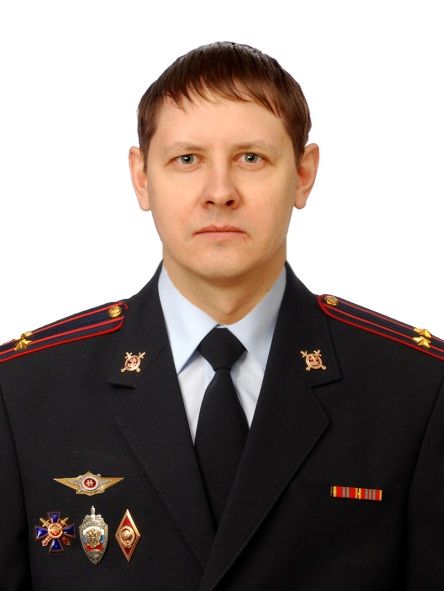
Skvortsova Elena Valer’evna

E-mail: skvlena@mail.ru

Place of work: Federal State Budget Educational Institution of Higher Education «Tula State University», Tula, Russia

Academic degree: PhD in Philology

Post: Associate Professor, Department of Linguistic and Translation Studies, Institute of Social Sciences and Humanities

Specialty from nomenclature of scientific specialties (Code of Higher Attestation Commission):  10.02.01 –Russian Language, 10.02.19 – Theory of Language

Scientific major: semantics, linguistic axiology, cognitive linguistics, theory of translation

Important publications:

  1. Skvortsova, E. V. Intensifikatsiya i diminutivnost’ kak proyavlenie asimmetrii polozhitelnoi i otritsatelnoi zon otsenki // Vestnik Orlovskogo gosudarstvennogo universiteta. Seriya: Novye gumanitarnye issledovaniya. №5 (13). Pp. 249-251.
  2. Skvortsova, E. V. Leksiko-semanticheskie aspekty asimmetrii otsenochnykh zon (na materiale russkogo i angliiskogo yazykov): monografiya. Tula: Izdatel’stvo TulGU, 2013. 145 p.
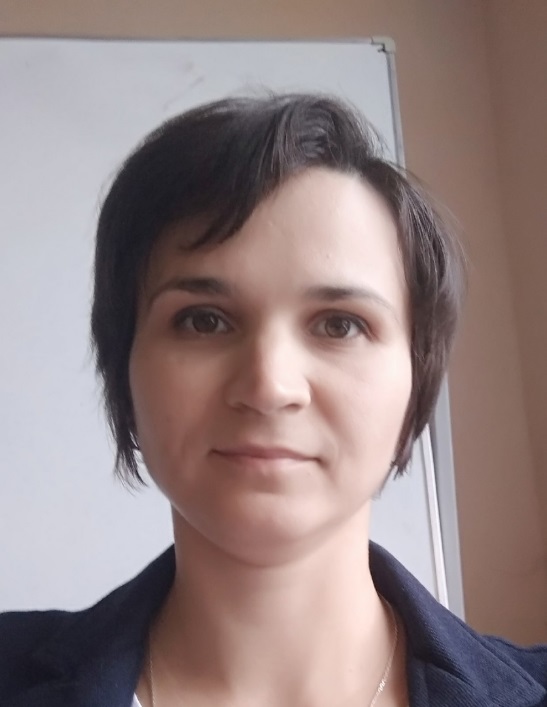
 

Syomina Olga Yurievna

E-mail: syomina1007@yandex.ru

Place of work: Federal State Budget Educational Institution of Higher Education «Tula State University», Tula, Russia

Academic degree: PhD in Philology

Post: Associate Professor, Department of Linguistic and Translation Studies, Institute of Social Sciences and Humanities

Specialty from nomenclature of scientific specialties (Code of Higher Attestation Commission):  10.02.01 – Russian Language, 10.02.19 – Theory of Language

Scientific major: semantics, corpus linguistics, cognitive linguistics, theory of translation

Important publications:

  1. Semina, Yu. Ob ispol’zovanii dannykh natsional’nogo yazykovogo korpusa pri perevode // Izvestiya Tul’skogo gosudarstvennogo universiteta. Gumanitarnye nauki. 2014. № 1. P. 336-341.
  2. Fatyushina, E. Yu., Semina O. Yu. Zoonimicheskie metafory so znacheniem otritsatel’noi otsenki cheloveka v rechi bilingvov // Filologicheskie nauki. Voprosy teorii i praktiki. 2017. № 12-2 (78). P. 156-159.
  3. Tivyaeva,, Syomina, O. English Mnemonic Lexicon: Constituent Structure and Verbalization Potential // English Studies at NBU. 2020. 6 (1). P. 29-68.


Development of interethnic tolerance of student youth on the material of the motion pictures

DOI 10.51955/2312-1327_2021_3_216

Irina V.Chelysheva

Abstract. The article discusses methodological and methodical approaches to the problem of the development of interethnic tolerance of the student audience based on the material of fiction movies. The author presents the implementing of a cycle of media education classes in the educational process of a university based on the identified main Russian and foreign theoretical and methodological concepts for the development of interethnic tolerance, which can be a promising basis for further successful development in Russian conditions in the context of using educational, educative tasks of media education; development of technologies and methods for conducting training sessions at the university with elements of media education, contributing to the development of interethnic tolerance.

The author presents an analysis of classes, the fundamental basis of which is modern domestic and foreign methods and technologies that are most widely used in modern media education practice. The work with feature films is based on the main types of analysis of works of media culture: autobiographical, structural, critical, semiotic, identification, analysis of cultural mythology, analysis of key characters, etc.

Keywords: media, media education, interethnic tolerance, students, motion pictures, creative activities, analysis of the media text.

Download article in PDF 318.0 kB

The system of communication exercises for the development of verbal skills of primary schoolchildren on the basis of folk literature

DOI 10.51955/2312-1327_2021_3_230

Sonombal T. Sodnomov

Abstract. The paper discusses the system of communication exercises based on the materials of small genres of the Buryats folk literature. Buryat folklore consists of myths, legends, üligers, proverbs, sayings, riddles, fairy tales, etc. In this paper proverbs, riddles and fairy tales served as materials for communication exercises. Communication exercises for the development of verbal skills of primary schoolchildren in the study of the epic “Geser” were presented in the paper “Studying the Buryat heroic epic “Geser” at school” in the International Information and Analytical Journal “Crede Experto: Transport, Society, Education, Language” No. 4, 2019.

In the process of acquaintance with small genres of Buryat folklore, primary schoolchildren learn about life, they develop the skills of artistic perception of the world around them.

This paper describes six groups of communication exercises that make up the system. This system of exercises can be used by a teacher of primary school at the lessons of literary reading in the Buryat language in order to enrich and develop the native Buryat speech of primary schoolchildren. The exercises are aimed at the formation of intonation skills, the ability to find and use the expressive means of the Buryat language in speech, at the formation of literary and creative skills, etc.

Key words: primary schoolchild, folk literature, native Buryat language, literary development in the Buryat language, development of verbal skills, system of exercises, communication exercises, expressive means of the native Buryat language.

Download article in PDF 330.3 kB

Modern problems of prevention of juvenile delinquency in the Irkutsk region

DOI 10.51955/2312-1327_2021_3_244

Ekaterina Z. Sidorova

Sergey V. Gabeev

Abstract. The topic of preventing juvenile delinquency is very broad and multifaceted. In this article, the authors address the current problems that, in their opinion, hinder the implementation of high-quality prevention of illegal behavior of adolescents at the level of the Irkutsk region. The issues of the current state of juvenile delinquency are discussed, and the structure of this type of crime is highlighted. Some general and specific problems of juvenile delinquency prevention (specific to the Irkutsk region) are revealed. In particular, such problems as the “transfer” of modern crime to the virtual sphere, the unfavorable socio-economic situation in the country and the region, the deformation of the family institution, the high level of criminalization of society, the lack of control of minors and their lack of activities in public, sports, cultural and other socially significant life are highlighted. At the end of the study, the authors come to the conclusion that it is necessary to adjust the methods used at the present stage of prevention of youth crime in our region. In order to influence the crime of minors in the Irkutsk region, it is necessary to develop a unified regional state program for the prevention of juvenile delinquency. The authors state that the development of such a program is a very complex, time-consuming and responsible work that must be carried out with the participation of specialists and criminologists.

Keywords: juvenile delinquency, criminological prevention, crime prevention, deviant behavior, crime in the Irkutsk region, general social prevention, early prevention.

Download article in PDF 300.4 kB

Gabeev Sergey Valeryevich

E-mail: kafedra.upik@yandex.ru

Place of work: Federal State State-owned Educational Institution of Higher Education «East Siberian Institute of the Ministry of Internal Affairs of Russia», Irkutsk, Russia

Post: senior lecturer of the Department of criminal law and criminology

Scientific major: criminal law, criminal executive law, criminology, pedagogy

Important publications:

  1. Gabeev, S. V. Ponyatie i priznaki ubijstva po najmu // Altajskij yuridicheskij vestnik. 2020. № 2 (30). S. 50-54.
  2. Gabeev, S. V. O vzaimosvyazi ugolovnogo prava i kriminalistiki // Kriminalistika: vchera, segodnya, zavtra. 2020. № 1 (13). S. 24-30.

Development of interethnic tolerance among university students on the material of television media texts

DOI 10.51955/2312-1327_2021_3_202

Galina V. Mikhaleva

Abstract. The article discusses the methodological and methodical tools in the study of realizing educational objectives by means of media education based on the material of television media texts, including the technologies and methods of conducting university practical classes with elements of media education to foster students’ interethnic tolerance. Practical approaches are based on the methodology for performing literary-imitative, literary-analytical, theatrical role-playing activities on the material of media culture, based on the key concepts of media education: media agencies, media categories, media languages, media technologies, media representations, media audiences. Media education allows one to solve specific educational tasks in the discussion of television programs on the topic of interethnic tolerance in the student audience, which are as follows: forming a stable sense of rejecting the ideology of racial, national, interethnic, interfaith intolerance and extremism among university students; developing students’ critical skills for analysing media texts on the topic of interethnic tolerance; destroying social prejudices and stereotypes in the university environment; teaching young people to define methods of media manipulation and the propaganda of interethnic intolerance in the media based on a critical analysis of media texts; expanding and enriching the cultural, historical and social experience of the youth audience in the field of intercultural communication.

Keywords: interethnic tolerance, television media texts, students, dialogue of cultures, ethnic stereotypes, media education, media text, re-presentation, hate speech, national identity, ethnic culture, xenophobia.

Download article in PDF 292.2 kB

Active processes in the vocabulary of the german language in 2020–2021

DOI 10.51955/2312-1327_2021_3_151

Lyubov A. Nefedova

Abstract. The article discusses the active processes in the vocabulary of the modern German language in 2020–2021: the processes of borrowing, word formation and semantic derivation. The processes of borrowing and word formation from foreign language/borrowed elements are interpreted as exogenous processes that form a global identity, and are opposed to word-formation processes from autochthonous elements, defined as endogenous processes that contribute to the formation of national identity. Semantic derivation and hybrid word formation are understood as exogenous-endogenous processes of the formation of global and national identity. The article notes that modern borrowings in German are direct borrowings from the English language (7%), less often calques and half-calques, as well as replacing of German words with English words and pseudo-borrowings. It is shown that borrowing becomes the cause of a special lexical and phraseological synonymy in the German language. The creation of culturally-marked vocabulary, lexical polyonymy for expressing key concepts, metaphorization and contamination that implements a language game are described as features of modern word formation. Attention is drawn to the main groups of new phraseological units, as well as to the role of hybridization in word- and phrase formation. The processes of semantic derivation are described as the semantic development of vocabulary based on the concretization and specialization of the relationship.

Key words: borrowing, word formation, phrase formation, semantic derivation, exogenous process, endogenous process, loan translation, hybridization, metaphorization, polyonymy, contamination.

Download article in PDF 311.9 kB

Nefedova Lyubov Arkadyevna

e-mail: la.nefedova@mpgu.su

Place of work: Federal State Budgetary Educational Institution of Higher Education «Moscow Pedagogical State University», Moscow, Russia

Academic degree: Doctor of Philology

Academic status: Full professor

Post: Head of the department of German language, Institute of Foreign languages

Specialty from nomenclature of scientific specialties (Code of Higher Attestation Commission): 10.02.04 – German languages

Scientific major: lexicology of the German language, word formation, phraseology

Important publications:

  1. Nefedova, L.A. Foreign language vocabulary of the modern German language (aspects of cultural integration): monograph / L.A. Nefedova. – M.: Moscow Pedagogical State University, 2018. – 184 p. (In Russian)
  2. Nefedova, Lyubov/Oleg Polyakov. On Some Aspects of the Borrowing of Phrases from English into German and Russian // Phraseology in Multilingual Society / Ed. by E. Arsenteva. – Newcastle upon Tyne: Cambridge Scholars Publishing, 2014. – P. 141-155. (collective monograph)
  3. Nefedova, Lyubov. Feste Wortverbindungen als Realienbezeichnungen Deutschlands im russischen Lexikon der deutschen Kultur: Fragen der Lexikographierung von fremden Kulturen. In: Földes, Csaba/Nefedova, Lyubov (Hrsg.): Deutscher Wortschatz – interkulturell. – Tübingen: Narr Francke Attempto. (Beiträge zur interkulturellen Germanistik; 13). 2019. – S. 243–262. (In German)
  4. Nefedova, L.A. Direct loan and calque as language representation means of a borrowed concept (by the example of the phraseological concept first lady / pervaya ledi in German and Russian) // Language and Culture. – 2018. – No. 42. – P. 118 – 136. DOI 10.17223/19996195/42/7 (In Russian) DOI: 10.17223/19996195/42/7
  5. Nefedova, Lyubov. English Multi-word Expressions as False Friends between German and Russian: Corpus-driven Analyses of Phraseological Units. In: Mitkov, Ruslan (ed.): Computational and Corpus-based Phraseology: Recent Advances and Interdisciplinary Approaches. Proceedings of the Conference. – Volume II. – November 13-14, 2017 London, UK: Editions Tradulex, Geneva. – 2017. – P. 154–161.

Abbreviation as a way of concept nomination in the special area of knowledge (on the material of terminological abbreviations of German dialectology)

DOI 10.51955/2312-1327_2021_3_181

Inna V. Senina

Natal’ya I. Mokrova

Natal’ya S. Novolodskaya

Abstract. On the example of abbreviated versions of terms in the field of dialectology of the German language, the article dwells the issue on the main theoretical topics and trends in the development of abbreviation processes. Approaches to the interpretation of the terms “abbreviation” and “shortening” in domestic and foreign literature are being studied. Along with the identification and description of the main types of abbreviations, the problems of abbreviated homonymy and abbreviated synonymy are considered. The names of territorial dialects, in particular, their short forms, are defined as nomenclature designations that are not directly terms but are an integral part of dialectology and therefore belong to the terminological field of the discipline. From the point of view of the formation, development, and consolidation in the use of short forms of terms, the author’s, contextual, disciplinary, and common abbreviations are highlighted.

Keywords: dialectology, dialect, terminology science, terminology, term, concept, abbreviation, shortening.

Download article in PDF 553.0 kB

« Older Entries Recent Entries »